




Large-scale canteens are more than just dining spaces. They are operational hubs where efficiency, accuracy, and employee satisfaction intersect. Traditional cash handling often slows down service, creates queues, and adds unnecessary administrative work. The adoption of a cashless canteen system changes this dynamic, transforming canteens into streamlined, data-driven environments that serve employees faster and help management maintain better control. To build on this transformation, it is important to look closely at how these systems influence daily operations and long-term efficiency.
In this blog, we will understand the operational impacts of using a cashless payment system in the company canteen.
Significance of Cashless Payment System for Canteen Management
A cashless canteen management system is more than just a replacement for physical money. It is a structured approach that transforms how payments are handled in large-scale dining operations. Instead of employees carrying cash or waiting for change, they can pay using prepaid cashless cards, mobile wallets, or RFID cards for employee meals. This shift simplifies the payment process, reduces manual intervention, and provides management with real-time visibility into operations.
By digitizing payments, canteens become more efficient, transparent, and adaptable to organizational needs. The system ensures that both employees and management benefit from smoother operations, faster service, and better control.
Why Cashless Systems Matter
- Convenience for Employees: Workers no longer need to carry cash or worry about exact change. A quick tap or digital balance makes transactions effortless. It is all possible with cashless payment solutions for canteen management.
- Operational Efficiency: Staff spend less time handling money, which reduces queues and keeps service flowing during peak hours.
- Transparency in Records: Every transaction is logged digitally, eliminating errors and making audits simpler.
- Flexibility in Meal Plans: Subsidies, allowances, and customized meal plans can be managed automatically without manual checks.
- Improved Security: With no cash stored on-site, risks of theft or misplacement are minimized.
- Data-Driven Insights: Management gains access to real-time sales data, helping them plan menus, control inventory, and track employee preferences.
- Scalability Across Locations: With the help of a cashless canteen management system, organizations with multiple canteens can manage all sites centrally, ensuring consistency and efficiency.
- Better Hygiene Standards: Cashless payment for company canteens reduces physical interaction, which is vital in food service environments.
Read More: Reasons to Use RFID Based Prepaid Cards for Cashless Canteen Management System
Key Operational Challenges in Large-Scale Canteens
Here are the key challenges that every corporate canteens experience.
Challenge 1: Peak Hour Congestion
Meal breaks often see a rush of employees arriving at the same time. Cash transactions take longer, and even small delays add up, leading to long queues. Employees lose valuable minutes of their break waiting in line, which affects satisfaction and productivity.
Challenge 2: Manual Cash Handling Issues
Counting cash, giving change, and reconciling accounts at the end of the day are prone to errors. These tasks also increase the workload for staff, making operations less efficient and more stressful.
Challenge 3: Poor Data Visibility
Cash transactions make it difficult to track sales trends or understand employee preferences. Without clear insights, management struggles to plan menus, control inventory, or measure performance.
Challenge 4: Administrative Overload
Manual records and reconciliation create extra work for administrators. Reporting becomes slow, audits are complicated, and financial control weakens.
Challenge 5: Security Risks with Cash Storage
Handling large amounts of cash creates risks of theft or misplacement. Safeguarding money requires extra measures, which add to operational costs and complexity.
Challenge 6: Limited Flexibility in Meal Plans
Cash-based systems make it difficult to manage subsidies or customized meal plans. Employees may not receive benefits accurately, and management struggles to enforce policies.
Challenge 7: Lack of Centralized Control
For organizations with multiple canteen locations, managing cash separately at each site leads to inconsistencies. Without centralized control, monitoring performance across locations becomes difficult.
Challenge 8: High Staffing Requirements
Cash handling requires more staff at counters. This increases labor costs and reduces efficiency, especially during peak hours.
Challenge 9: Difficulty in Scaling Operations
As the workforce grows, cash-based systems struggle to keep up. Scaling operations without digital support becomes costly and inefficient.
Challenge 10: Limited Hygiene Standards
Handling cash involves physical contact, which can compromise hygiene in food service areas. This is a growing concern in large-scale canteens.
The Operational Impact of Cashless Payment Systems
Here are the key positive points of using a reliable and smart cashless payment system for corporate canteens.
Faster Transaction Processing and Reduced Queues
Using a cashless payment system for the corporate canteen is super simple. Digital payments take seconds. Employees tap their RFID card or use a prepaid balance, and the transaction is complete. This reduces queues and keeps the flow of people moving smoothly during peak hours.
Financial Transparency and Revenue Control
With a cashless payment solution, every transaction is recorded automatically. Management can see exactly how much revenue is generated and where money is going. This reduces errors and improves accountability.
Real-Time Sales Tracking and Data Analytics
Cashless systems provide instant data. Managers can track sales in real time, identify popular meals, and adjust menus accordingly. This helps in planning and ensures that employee preferences are met.
Automated Subsidy and Meal Plan Management
Organizations often provide meal subsidies. With cashless systems, these allowances are managed digitally. Employees receive their benefits automatically, and management can monitor usage without manual checks.
Inventory Optimization and Vendor Management Efficiency
Sales data connects directly with inventory records. Managers can plan stock better, reduce waste, and negotiate with vendors using accurate information. This improves efficiency and reduces costs.
Centralized Control Across Multiple Canteen Locations
For organizations with multiple canteens, cashless systems provide centralized control. With the help of cashless payment systems for corporate canteens, management can monitor all locations from one dashboard. It ensures consistency and efficiency across the board.
Contactless Transactions and Improved Hygiene Standards
Best part? Contactless payments reduce physical interaction. This improves hygiene standards, which is especially important in large dining spaces. Employees feel safer, and canteens maintain better health practices.
Measuring ROI of Cashless Payment Systems
The return on investment is clear. Reduced errors, faster service, and better data visibility all contribute to cost savings and improved efficiency. Over time, the system pays for itself through operational improvements.
Before and After: Operational Transformation with Cashless Solutions
Before the introduction of cashless systems, large-scale canteens often struggled with queues, errors, and poor visibility. Employees would spend a significant portion of their break waiting in line, which reduced the time they had to actually enjoy their meals. Manual cash handling created frequent mistakes, whether in counting, giving change, or reconciling accounts at the end of the day. For management, the lack of clear data made it difficult to track sales, control costs, or plan inventory effectively. These issues combined to create frustration for employees and inefficiency for administrators.
After the implementation of a cashless canteen management system, operations become noticeably smoother. Employees enjoy faster service because transactions take only seconds with RFID cards for employee meals. Queues shorten, and the overall dining experience feels more organized. Management gains better control over finances, with every transaction recorded digitally, making audits and reporting far more accurate. Inventory planning improves because sales data is available in real time, and subsidies or meal allowances can be managed automatically without manual checks.
The transformation is not just visible in daily operations but also in long-term efficiency and satisfaction. Over time, cashless systems reduce administrative workload, improve transparency, and create a healthier dining environment through contactless transactions. Employees feel more valued when their meal breaks are stress-free, and management benefits from a system that aligns with broader organizational goals. In essence, the shift from cash to digital payments turns the canteen into a well-organized, technology-driven space that supports both productivity and employee well-being.
Implementation Strategies for Large-Scale Canteens
Implementing cashless systems in large-scale canteens requires careful planning and structured execution. A sudden shift from cash to digital payments can create confusion if not managed properly, so organizations need to take a phased approach. The process begins with selecting the right solutions, such as RFID Cards for employee meals or prepaid cards, and then gradually integrating them into daily operations. Training staff is equally important, as they must be comfortable with the new system to ensure smooth service.
Communication with employees plays a vital role in successful adoption. Workers need to understand how the system works, how they can use their cards or mobile wallets, and what benefits they will gain from the change. Once the system is live, continuous monitoring and feedback help refine the process further, ensuring that both employees and management experience the full advantages of a cashless canteen management system.
Key Steps in Implementation
• Start with RFID cards or wristbands: These are simple, reliable, and easy to introduce as the first step in digitizing payments.
• Train canteen staff thoroughly: Staff must be confident in handling digital transactions, troubleshooting issues, and guiding employees.
• Integrate with enterprise tools: Linking the system with ERP, HRMS, or payroll ensures smooth management of allowances and deductions.
• Adopt a gradual rollout: Begin with one location or a smaller group of employees before expanding to the entire workforce.
• Communicate with employees clearly: Provide instructions, FAQs, and demonstrations so employees feel comfortable using the system.
• Monitor performance continuously: Track transaction speed, queue length, and employee feedback to identify areas for improvement.
• Refine based on feedback: Adjust processes, update training, and enhance features to ensure long-term success.
Conclusion: Why Cashless Payment Systems Are Operationally Essential
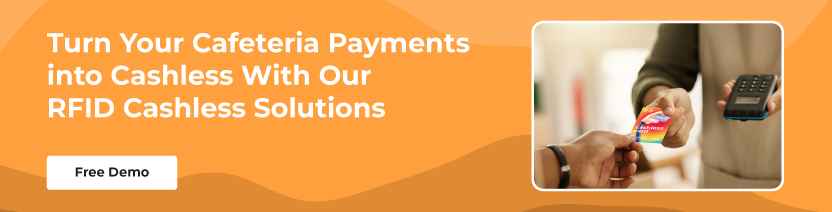
A cashless canteen system is more than a payment method. It is an operational solution that improves speed, accuracy, and satisfaction. By adopting cashless payment for company canteens, organizations gain efficiency and control. With RFID cards for employee meals, the process becomes even faster and more reliable. The operational impact is strong. Large-scale canteens can serve more people in less time, reduce errors, and manage costs better. A cashless canteen management system is not optional anymore; it is essential for modern workplace dining.
Read More: Festival and Event Food Courts: Boosting Sales with RFID Wristbands
FAQs
A Cashless Canteen System is a digital payment solution that replaces physical cash with mobile wallets or RFID Cards for Employee Meals. It simplifies transactions, reduces queues, and provides management with real-time visibility into canteen operations.
Employees benefit from faster transactions, shorter queues, and the convenience of not carrying cash. They can also track their spending easily and enjoy smoother meal breaks without delays.
Management gains financial transparency, automated subsidy management, and real-time sales tracking. It also reduces administrative workload, improves inventory planning, and ensures centralized control across multiple canteen locations.
RFID cards are quick, reliable, and easy to use. Employees simply tap their card, and the system deducts the meal cost instantly. They integrate well with employee ID systems and are faster than mobile payments, especially in high-traffic canteens.