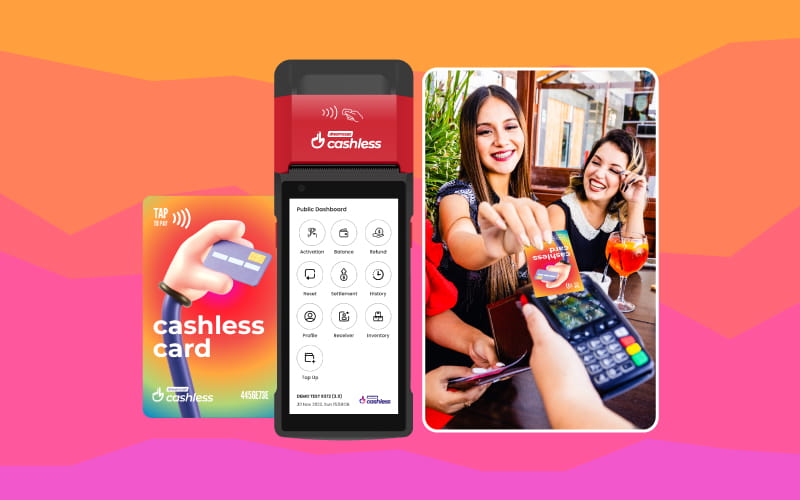




Events and retail operations are complex environments where speed, accuracy, and customer satisfaction all collide. A single delay at the payment counter or a mismatch in stock records can ripple across the entire operation. Businesses that rely on outdated systems often face wasted resources, frustrated customers, and missed opportunities. The demand for smarter solutions is not just about convenience; it is about survival in competitive markets. Cashless payment platforms that include inventory management offer a way to bring clarity and control.
They combine financial oversight with real-time stock visibility, ensuring that every transaction is accounted for and every item is tracked. This integration helps organizations maximize ROI while keeping operations smooth and reliable.
What is a Cashless Payment Platform with Inventory Management?
A cashless payment platform is a system that allows transactions without physical money. Customers pay digitally, and businesses receive funds instantly. When inventory management is added, the platform becomes more than just a payment tool. It transforms into a dual-purpose system that handles both money and goods. Every sale automatically updates stock levels, reducing errors and saving time. Managers no longer need to reconcile separate records or worry about mismatched data. Instead, they gain a single source of truth that reflects both financial and inventory positions. This integration creates efficiency, accuracy, and transparency, which are essential for improving ROI.
Why ROI Matters in Event and Retail Operations
ROI is the measure of how well resources are used to generate value. In events and retail, margins are often tight, and small mistakes can lead to significant losses. A misplaced item, a delayed payment, or a stockout can reduce profitability. By using platforms that combine cashless payments with inventory management, businesses reduce waste and improve efficiency. ROI grows because every transaction is tracked, every item is accounted for, and every decision is based on reliable data. This means managers can focus on growth rather than fixing errors.
Key Features of Cashless Payment Platforms with Inventory Integration
Cashless payment innovations bring speed and accuracy to transactions. A corporate cashless payment system centralizes financial and stock records, making oversight easier. A next-generation cashless payment system adapts to different business needs, whether small-scale or large-scale. Together, these features create a powerful platform. Real-time updates link sales with inventory, automated reporting highlights trends, and built-in tools reduce human error. The result is a system that supports both financial control and operational efficiency.
1. Real-Time Sales and Inventory Updates
Every transaction instantly reflects in the inventory system. This eliminates manual reconciliation and ensures that managers always know the exact stock position. Real-time updates reduce errors, prevent mismatched records, and allow businesses to act quickly when demand shifts.
2. Automated Reporting and Analytics
The platform generates detailed reports without requiring manual input. These reports highlight sales trends, stock movement, and customer preferences. Automated analytics help managers identify what is working and what needs adjustment, leading to smarter decisions and stronger ROI.
3. Error Reduction Through System Integration
Human error is one of the biggest challenges in retail and event operations. By linking payments directly with inventory, the system reduces mistakes that occur when records are handled separately. This integration ensures accuracy in both financial and stock data.
4. Scalability for Different Business Sizes
A next-generation cashless payment system is designed to grow with the business. Whether managing a small event or a large retail operation, the platform adapts to the scale. This flexibility makes it suitable for diverse environments, ensuring consistent performance across different levels of demand.
5. Centralized Oversight and Control
A corporate cashless payment system provides a single hub for monitoring both financial transactions and inventory. Managers can oversee operations from one place, reducing complexity and improving transparency. This centralized control strengthens accountability and supports better planning.
6. Enhanced Security and Compliance
Digital transactions reduce risks associated with handling cash. Integrated systems also provide secure records that support compliance with financial and operational standards. This feature protects businesses from losses and ensures that data remains reliable.
How Cashless Payments Reduce Revenue Leakages
Revenue leakages occur when transactions are not recorded correctly or when stock is mismanaged. Cashless platforms reduce this risk by digitizing every payment. There is no room for missing records or manual errors. When linked with inventory, the system ensures that every sale is matched with a stock update. This prevents losses and strengthens financial control. Businesses gain confidence knowing that revenue is secure and ROI is protected.
Real-Time Inventory Tracking for Better Decision-Making
Real-time tracking means managers can see stock levels instantly. They know what is selling fast and what is not moving. This helps them plan purchases, adjust pricing, and manage promotions. Decisions are based on facts, not assumptions. ROI improves because resources are used wisely. Managers can avoid overstocking items that do not sell and ensure that popular products are always available.
Minimizing Stockouts and Overstocking with Smart Systems
Stockouts frustrate customers and damage trust. Overstocking wastes money and ties up capital. Smart systems prevent both by maintaining balance. By linking payments with inventory, businesses know when to reorder and when to slow down. This reduces waste and keeps customers satisfied. ROI grows because resources are not wasted, and customer loyalty is maintained.
Faster Transactions and Improved Customer Experience
Speed matters in both events and retail. Customers expect quick service, and delays can harm satisfaction. Cashless platforms process payments faster than traditional methods. Inventory updates happen instantly, ensuring that records remain accurate. This creates a smooth experience for customers and reduces waiting times. Happy customers return, and ROI grows through repeat business.
Data-Driven Insights for Sales and Inventory Optimization
Data is valuable when it is accurate and easy to use. Cashless platforms with inventory integration provide clear insights into sales and stock. They show which products are popular, which times are busiest, and which items need attention. Managers can use this information to optimize sales strategies and manage stock levels. ROI increases because decisions are smarter and based on real evidence.
Reducing Operational Costs Through Automation
Manual work is costly and prone to errors. Automation reduces this burden. Cashless platforms handle payments automatically, inventory updates happen without human input, and reports are generated with minimal effort. This reduces labor costs and minimizes mistakes. ROI improves because operations are leaner, faster, and more reliable.
Enhancing Vendor and Staff Efficiency
Vendors and staff benefit from clear systems. They spend less time fixing mistakes and more time serving customers. Cashless platforms provide transparency, making it easier to manage responsibilities. Staff can focus on customer service, while vendors can track sales and stock with confidence. Efficiency improves across the board, and ROI rises as a result.
Integration with POS and Event Management Systems
Cashless platforms do not work in isolation. They integrate with POS systems and event management tools. This creates a unified environment where payments, inventory, and operations are connected. Managers have one system to oversee everything, reducing complexity and improving control. ROI grows because integration eliminates duplication and ensures that all parts of the business work together.
Best Practices for Implementing Cashless Payment and Inventory System
- Start with clear goals for ROI improvement.
- Train staff to use the system effectively.
- Monitor data regularly to adjust strategies.
- Ensure integration with existing POS and event tools.
- In order to plan promotions and manage stock use insights.
- Keep the system updated for security and performance.
These practices make sure that businesses gain the full benefits of cashless platforms with inventory management.

Final Words- Maximize Event ROI with Integrated Cashless Payment System
Cashless payment platforms with inventory management are more than tools. They are strategies for smarter business operations. They reduce revenue leakages, improve customer experience, and provide data-driven insights. They minimize stockout and overstocking, cut operational costs, and enhance staff efficiency. When integrated with POS and event systems, they create a unified solutions that strengthen ROI.
Businesses that adopt innovative cashless payment systems gain more than efficiency. They gain clarity, control, and profitability. ROI is maximized because every transaction and every item is managed with precision.
FAQs
They speed up transactions, reduce manual work, and provide accurate records. When combined with inventory tracking, they prevent revenue leakages and help managers make smarter decisions, which directly improves ROI.
By linking payments directly with inventory, businesses can monitor stock levels in real time. This helps them reorder products before they run out and avoid buying excess items that do not sell.
Yes. Faster transactions reduce waiting times, and accurate inventory ensures customers get what they want without delays. A smooth experience encourages repeat business and builds loyalty.
They highlight sales trends, customer preferences, and stock movement. Managers can use this information to plan promotions, adjust pricing, and optimize inventory strategies.