

TL;DR Verdict
Dreamcast Cashless is a better option for event organizers handling large events, exhibitions, festivals, and conferences beyond basic cashless transactions.
While Finkup offers cashless transactions, Dreamcast provides an ecosystem integrating RFID/NFC transactions, registration, check-ins, access control, engagement, analysis, and event operations in one package.
This track record of working effectively at high-attendance events such as the Jaipur Literature Festival and India Mobile Congress makes Dreamcast a better option for event organizers looking to scale.
Introduction
For an event, expo, festival, university fest, or conference that will draw thousands or lakhs of people, Dreamcast Cashless is normally the superior choice because of its capability in handling high-volume transactions, integration within the event technology ecosystem, and experience at implementing large-scale events.
Finkup might suit well for smaller cashless payment needs, although organizers seeking to integrate cashless payments together with registration, access management, participant interaction, reporting, and other features may be better served by Dreamcast.
It’s not about which cashless payment technology platform is “better.” It’s about which one meets the needs of the event organizers based on their unique situation.
This comparative analysis will focus on Dreamcast Cashless vs. Finkup from the point of view of the concerns of event organizers.
Industry Statistics Every Organizer Should Know
- Contactless payments will continue to grow. Visa reports suggest that contactless payment adoption continues to increase globally because of speed and convenience.
- Customer experience will directly impact spending. According to PwC, 86% of consumers are willing to pay more for a better customer experience.
- RFID adoption continues to expand. The RFID market is expected to experience substantial growth across industries due to increasing demand for automation and tracking capabilities.
- Self-service technology adoption is getting more popular. Research from Harvard Business Review highlights growing customer preference for self-service experiences that reduce waiting times.
- Operational efficiency is a major automation driver. McKinsey research consistently identifies operational efficiency and process automation as leading technology investment priorities.
The Most Important Question: How Large Is Your Event?
Organizers often look at the features without considering scale. While something that works well for 2,000 attendees will have issues working smoothly if you have 50,000+ attendees coming into your event through different entry gates, making purchases, and entering restricted areas.
Based on the implementation of cashless systems in large-scale events, here are some common factors:
- Quick transaction processing
- Offline payments
- Real-time synchronization
- Scalability
- Access control
- Attendee validation
That is why the implementation experience becomes more important than features.
Why Cashless Event Technology Matters More Than Ever
A cashless system is more than a payment system. It is an operational infrastructure for events today.
As per the research by Mastercard about its New Payments Index, digital and contactless payment experiences are still a growing trend among consumers.
There will be a significant increase in the RFID market over the coming years, driven by the use of the technology in events, retail, health care, and venues.
Event managers, therefore, cannot afford to ignore cashless payment technology.
Dreamcast Cashless vs Finkup: Quick Comparison
| Features | Dreamcast | Finkup |
| Cashless Payments | Yes | Yes |
| RFID Support | Yes | Yes |
| QR Payments | Yes | Yes |
| Event Registration | Yes | Limited |
| Check-In Management | Yes | Limited |
| Badge Printing | Yes | No |
| Access Control | Yes | Limited |
| Event App Integration | Yes | Limited |
| Analytics Dashboard | Yes | Yes |
| Large-Scale Event Experience | Extensive | Moderate |
| End-to-End Event Ecosystem | Yes | No |
The biggest distinction is that Dreamcast is not solely a payment platform. It operates as part of a broader event technology ecosystem.
Dreamcast Cashless vs Finkup
The selection of cashless event platforms is not solely dependent on feature lists. The true analysis needs to consider aspects such as efficiency, scalability, experience, and long-term needs of events. In the following sections, the differences between Dreamcast and Finkup are explained in terms of five important criteria.
1. Event Scale & Operational Readiness
Dreamcast
The Dreamcast solution is designed for events with high footfalls like exhibitions, trade fairs, government summits, festivals, and other conferences that could attract a few thousand to a few hundred thousand visitors. It has been used at events like the Jaipur Literature Festival and India Mobile Congress, where controlling the movement of visitors, access, and cashless transactions is key.
Also Read: Travel Trade Show & Exhibitions Management: Your Comprehensive Guide
Finkup
In general, Finkup may work best for small- to medium-scale cashless setups whose main objective is payment. In case there is less complexity involved in the event process, then Finkup might be sufficient.
For large-scale events involving several access points, VIP areas, exhibits, and complex visitor journey management, Dreamcast would prove more robust.
2. Cashless Payment Experience
Dreamcast
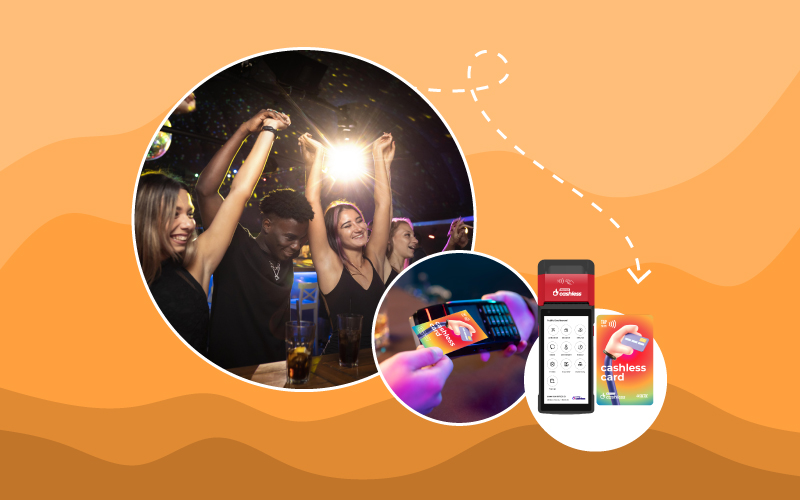
Dreamcast facilitates cashless systems that employ RFID or NFC technologies, allowing attendees to pay for services or goods through the use of smart bracelets or badges. The system enables organizers to keep track of all transactions, issue refunds, detect expenditure trends, and minimize reliance on cash.
Further, payments could be used in an entire identity ecosystem, making purchases related to access rights and event interaction.
Finkup
Finkup is mainly concerned with facilitating cashless payments or digital payments. It provides efficient payment management but may require integration with other systems for managing events by organizers.
Both software platforms provide the functionality of cashless payments, although Dreamcast outperforms in situations where payments have to be integrated into event operations.
You must also read How to Implement RFID Cashless Payments at Events for detailed insights.
3. Integration with Event Operations
Dreamcast
One of the unique features of Dreamcast is that cashless payments do not come on their own. Payments can be connected to:
- Event registration
- Check in via QR code
- Printing of badges
- Access control
- Networking among attendees
- Mobile event applications
- Data analytics dashboards
This eliminates the necessity of working with various vendors and independent systems.
Finkup
Finkup primarily concentrates on the payment process. For registration, attendee engagement, access control, and other event functions, organizers will have to work with other vendors.
In case an event requires a comprehensive attendee experience and not just the transaction, Dreamcast would be more relevant.
4. Access Control & Security
Dreamcast
Dreamcast allows event organizers to incorporate a cashless system and RFID/NFC-based access control in one package. The same card can serve the following purposes:
Venue admission
Entry to the VIP zone
Access to restricted areas
Networking activities
Cashless payments
This provides a convenient and secure experience for attendees.
Finkup
Even though Finkup is a payment authentication system, access control is not its forte. Other tools may be needed to manage zones and verify attendees.
For multizone events and conferences, access control is a great feature.
5. Analytics, Reporting & Decision-Making
Dreamcast
Dreamcast enables the organizers to have insight into:
- Transaction numbers
- Spending patterns
- Behaviors of attendees
- Times of peak transactions
- Zone utilization
- Data regarding registration and attendance
Since Dreamcast integrates different components of the event, organizers receive a well-rounded understanding of the performance of their event.
Finkup
Finkup is characterized by detailed transaction reports and payment insights that can be enough for organizers interested in financial analysis.
The integration of payment insights together with attendee and operational insights gives deeper insights into events.
Case Study: Jaipur Literature Festival 2025
An excellent example of large-scale implementation of cashless and access management solutions comes from Dreamcast’s collaboration with the Jaipur Literature Festival (JLF) 2025, considered one of the largest literary festivals globally.
Dreamcast has been a technology partner for this annual literary festival for almost a decade. As the event kept growing in terms of its reach, there was a need for an advanced technology solution that could handle access control, networking, payment, and authentication of attendees.
What Dreamcast implemented:
A smart badge system was introduced by Dreamcast using NFC technology that integrated different capabilities within one card for each attendee:
- NFC-enabled access management
- Payment via cashless NFC cards with pre-paid balances
- Event kit verification by the attendee
- Networking capability via badge-to-badge info exchange
Benefits:
- Faster check-in processes due to NFC-enabled access points
- Less cash usage among attendees
- Higher security for transactions thanks to badge encryption
- Efficient distribution of event kits via badge verification
- Simplified networking via badge information exchange
At a festival that attracts hundreds of thousands of visitors daily, integrating payment, access management, and even networking capabilities into a smart badge greatly simplifies the process and enhances the experience of attendees.
“Event organizers often compare cashless platforms based on payment features alone. In reality, the biggest operational challenges emerge when payments, attendee access, registration, and reporting operate in separate systems. The most effective cashless solutions are those that integrate seamlessly into the entire event journey while remaining reliable under peak demand.”
— Event Technology & Operations Consultant
How to Choose the Right Cashless Platform
Instead of focusing only on features, evaluate platforms using these five criteria:
- Transaction Reliability:
Can the platform continue operating during peak transaction periods?
- Event Scale Readiness:
Has the provider successfully supported events similar to yours?
- Ecosystem Integration:
Can registration, check-in, access control, attendee engagement, and payments operate together?
- Analytics & Reporting:
Can organizers monitor transactions, spending patterns, and operational performance in real time?
- Attendee Experience:
Does the solution reduce friction or introduce additional steps?
The strongest cashless systems improve operations while remaining nearly invisible to attendees.
Where Dreamcast Has an Advantage
1. Integrated Event Technology
Many organizers use separate vendors for:
- Registration
- Check-in
- Badge printing
- Mobile apps
- Access control
- Cashless payments
This often creates data silos and operational inefficiencies. Dreamcast combines these functions within a unified event ecosystem.
2. Experience with High-Footfall Events
Large exhibitions, government summits, trade shows, and festivals require infrastructure capable of handling significant attendee volumes.
Dreamcast’s experience with events involving lakhs of attendees provides operational knowledge that extends beyond software functionality.
3. Access Control + Cashless Operations
One overlooked benefit of RFID-based ecosystems is the ability to combine payments, entry management, VIP access, restricted zone access, and attendee tracking within a single infrastructure layer.
Where Finkup May Be a Good Fit
To provide a balanced comparison, Finkup may be suitable when:
- Event size is relatively small
- Cashless payments are the primary requirement
- Advanced access control is unnecessary
- Registration and attendee engagement tools are already available
For straightforward cashless payment deployments, organizations may not require a full event technology stack.
What Event Organizers Commonly Get Wrong
Payment queues are second only to registration problems when it comes to sources of frustration among attendees.
Based on our industry experience, the following aspects are often underestimated by organizers:
- The volume of transactions in peak hours
- Dependence on network connectivity
- Refund mechanisms
- Top-ups
- Integration with third parties
- Reports and reconciliations
The right cashless technology is not necessarily the least expensive option. Rather, it is the one that will still work smoothly during the actual event.
Final Thoughts
Finkup might be the ideal solution for those looking for an all-in-one payment platform for small events.
But when it comes to conferences, fairs, festivals, government events, expos, and larger-scale events that require event registration and check-in, crowd management, access control, analytics, and cashless payments, then Dreamcast appears to be a better fit.
What sets Dreamcast apart is that it is not just about the cashless payment process, but about supporting everything throughout the attendee lifecycle.
At the end of the day, for events that require higher levels of reliability over features, Dreamcast tends to be the better solution.
FAQs
If I’m organizing an event with thousands or even lakhs of attendees, Dreamcast is generally the better option because it combines cashless payments, registration, check-in, access control, and attendee engagement within one ecosystem.
If I want faster transactions, shorter queues, and better attendee tracking, RFID or NFC technology is usually worth the investment, especially for multi-day events and festivals.
Yes. I can use Dreamcast Cashless as a standalone payment solution, but I can also integrate it with registration, check-in, mobile apps, and access control if needed.
For high-footfall events where attendee movement, access management, and transaction speed are critical, Dreamcast generally offers more operational flexibility and scalability.
I should look for publicly available case studies, transaction volumes, attendee numbers, and deployment history. Platforms that have successfully managed large events are usually lower-risk choices.
The biggest advantage is that the Dreamcast is not limited to payments. It supports the complete attendee journey from registration and entry to networking, access management, cashless transactions, and analytics through a single integrated platform.