


If you’re part of the events world, you’ve probably heard a lot of buzz about artificial intelligence. And with all that buzz comes confusion. Some people think AI will replace planners. Some believe it’s too complicated. Others imagine it’s a magical tool that solves everything in seconds. The truth? AI for events is powerful, but not in the way many myths make it sound.
In this guide, let’s break down the AI Myths in Events. Uncover the AI Facts in Events. Let’s paint a realistic picture of how AI is transforming experiences. It’s not replacing humans, but empowering them. Running conferences, concerts, trade shows, or large-scale festivals? AI-powered event solutions can take events to the next level. So, let’s debunk some myths and address facts. Let’s explore how AI is transforming modern event technology services.
Debunking 9 Myths About AI for Events
Organizers need to know the event myths with facts. Here are some AI myths at events to debunk.
Myth 1: AI Will Replace Event Planners
One of the biggest fears is the idea that AI is coming for everyone’s job. It’s a classic myth.
The Fact: AI Won’t Replace Planners. Instead It Will Support Them
AI is here to assist you. The repetitive and time-consuming tasks can be automated. So, planners can focus on creativity, relationships, and strategy.
- Analyzing Attendee behavior? AI does it in minutes.
- Want personalized recommendations for each attendee? AI handles the data.
- Looking for automated scheduling or matchmaking? AI makes it happen.
This is exactly where AI in event management shines. It automates a lot for planners. So, planners are free to innovate and create memorable experiences. So instead of thinking “AI is replacing me,” think “AI is helping me do more.”
Myth 2: AI Is Too Hard to Use for Events
AI is often thought of as super technical. Event professionals find it complicated to use. That’s another common misconception to debunk.
The Fact: Modern AI Event Solutions Are User-Friendly
Once upon a time, maybe AI felt intimidating. But today, event systems powered by AI come with:
- Easy dashboards.
- Drag-and-drop interfaces.
- Plug-and-play integrations.
- Simple automation workflows.
- Guided suggestions.
You don’t need deep technical expertise. AI-powered event solutions work almost like everyday apps you already use. For instance, AI-driven chatbots for attendee queries work out of the box. Recommendation engines for sessions operate automatically. It’s often connected to the event platform. And predictive analytics tools generate reports instantly. The manual effort has reduced significantly. Managing AI-powered tools feels like managing basic event platforms.
Myth 3: AI Makes Events Less Human
Introducing AI means removing the personal touch. That’s what a lot of organizers think. After all, events are about human connections, right?
The Fact: AI Actually Enhances Human Interaction
AI makes events more human, not less. How? AI frees up time. It creates personalization. Also, it reduces manual strain.
Think of personalization and connecting with the right people. That’s what AI can bring to the table. Attendees would receive personalized schedules. They would be tailored to their interests. People network based on shared goals. The networking recommendations are more personalized. The suggestions are smarter. Exhibitors find more relevant connections.
Such experiences are the reason why attendees join the event in the first place. Human engagement is the key. Be it an attendee or organizer, everyone gets more meaningful ways to connect.
Myth 4: AI Is Only Useful for Big Events
Organizers think AI can only be useful for large-scale events.
The Fact: AI Works for All Sizes of Events
AI brings value to all types of events. That means it’s scalable. This applies to every event. Whether you’re planning a 50-person workshop, a corporate offsite, a hybrid conference, or a multi-day festival.
Small events benefit from automation. Automated check-in and easy analytics. They also gain personalized recommendations and budget optimization. Large events use AI for crowd flow analysis and real-time engagement insights. Other benefits include AI-driven matchmaking and automated content summaries.
Myth 5: AI Cannot Understand Human Emotions
People assume AI cannot handle human nuances. That’s a myth.
The Fact: AI Supports Emotional Understanding Better Than You Think
AI can recognize emotional patterns:
- Sentiment analysis is good at identifying attendees. It helps with how attendees feel about sessions.
- Engagement tracking picks up which talks captivate participants.
- Chatbots can understand tone. That’s how they can respond politely or empathetically.
These tools are good at improving the emotional and experiential side of the event. AI does not replace human empathy. In fact, it’s good to provide valuable emotional insights. Event planners found that difficult to measure before.
Instead, it offers event planners valuable emotional insights. These insights were impossible to measure before.
Myth 6: AI Is Too Expensive for Event Planners
This is another myth that stops people from exploring AI opportunities.
The Fact: AI Tools Are More Affordable Than Ever
Event platforms come with built-in AI features. And, there is no extra cost. Examples include:
- Smart analytics.
- Chatbots.
- Lead scoring.
- Scheduling suggestions.
- Automated communication.
You can even start using certain tools. Plus, AI actually saves money. It reduces staff load. Improves resource allocation. Therefore, AI is increasing attendee satisfaction. So the investment directly improves ROI.
Myth 7: AI Is Only About Automation
Some believe AI is just about scheduling tasks or answering questions.
The Fact: AI Goes Far Beyond Automation
Sure, automation is part of AI. But it’s only one tiny slice of what’s possible with AI for events. Here’s what AI does beyond automation:
- Personalized content suggestions.
- Predictive audience insights.
- Intelligent matchmaking.
- Smart lead scoring for exhibitors.
- Real-time crowd heatmaps.
- Sentiment analysis.
- Post-event impact measurement.
- Content generation (emails, agendas, summaries).
This is why AI isn’t just a luxury. It’s a strategic advantage.
Myth 8: AI Cannot Improve Onsite Experiences
Some think AI is only helpful in virtual or hybrid events.
The Fact: AI Significantly Enhances Onsite Events
There are a few real use scenarios.
- AI facial recognition helps speed up check-in.
- AI monitors crowd density. This can help prevent congestion or delays.
- Smart kiosks guide attendees to sessions. They are guided based on interests.
- Enhancing safety and logistics with real-time insights.
- Predictive forecasting helps manage food, seating, and resources.
Myth 9: AI Poses Privacy Risks at Events
Privacy is a big concern, and rightfully so.
The Fact: AI Tools Follow Strict Security Standards
Reputable event technology partners follow:
- GDPR compliance.
- Data encryption.
- Permission-based APIs.
- Secure data storage.
- Zero-trust security frameworks.
AI doesn’t introduce new risks. It simply processes data you’re already collecting in a smarter way. Plus, attendees today expect personalization, and AI helps deliver that responsibly.
Real-World Impact of AI in Events
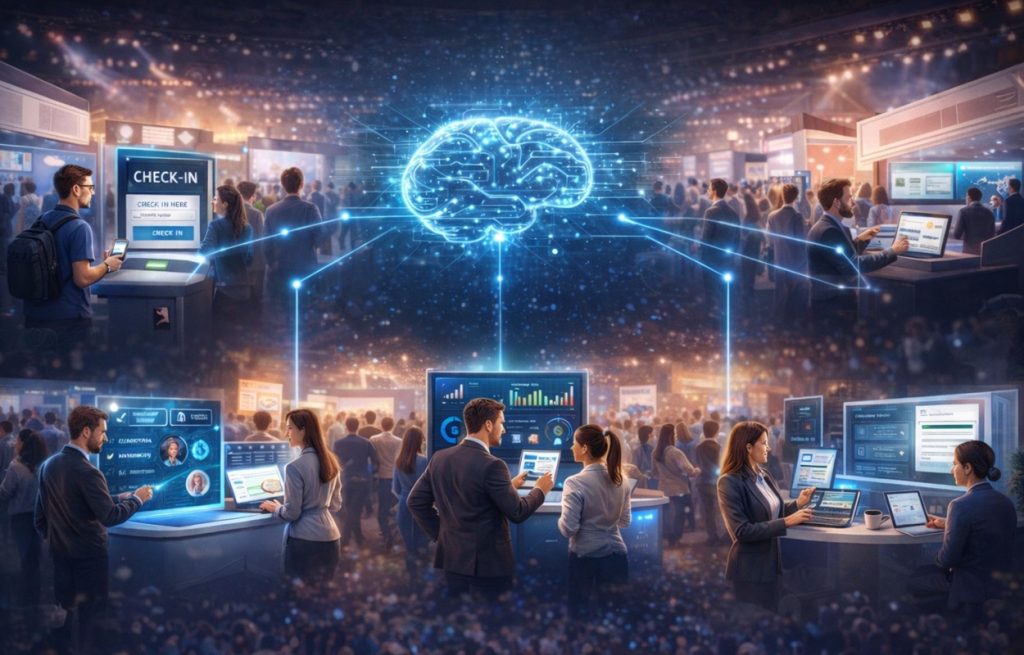
Now that we’ve busted the myths. Let’s look at the real impact AI is making at events.
- Smarter Registration and Check-In: AI reduces wait times and predicts peak check-in hours.
- Hyper-Personalized Attendee Journeys: People get customized agendas, networking suggestions, and session alerts.
- Intelligent Matchmaking: AI connects attendees with similar interests. This creates more meaningful relationships.
- Real-Time Analytics: AI gives instant insights. From session popularity to booth traffic.
- Enhanced Exhibitor ROI: Lead scoring, engagement tracking, and personalized recommendations help exhibitors achieve more.
- Automated Content Creation: Emails, social posts, reminders, and session summaries. AI speeds up content production.
- Better Post-Event Reporting: You know exactly what worked and what didn’t. Thanks to the AI-powered reports.
Why AI Matters in the Future of Event Management
AI is more than a trend. It is now a standard part of modern event planning. Organizers are adopting AI quickly for five main reasons:
1. Attendee Expectations Are Rising
Today’s attendees expect personalized experiences. They want relevant content and connections. AI is the only way to deliver personalization at a large scale. It meets these higher expectations.
2. Events Are More Data-Driven
Data is a crucial aspect of events. AI takes this raw data. It then converts it into actionable insights. Planners can use this information. So, they can make better decisions instantly.
3. Events Have Tight Budgets
Event budgets are often tight. AI helps planners make smarter decisions using fewer resources. This optimization saves money and improves efficiency.
4. Experiences Matter More Than Ever
The quality of the attendee experience is crucial. AI can elevate an event journey. It can take it from average to memorable. This is achieved through better engagement and interactions.
5. Hybrid and Virtual Aren’t Going Away
Hybrid and virtual formats are here to stay. AI bridge digital and physical event experiences. The experience is cohesive. The experience is integrated for all participants.
Final Thoughts
The biggest truth of all? AI isn’t a threat to the event industry. It’s a massive opportunity. Understanding the AI facts in events helps you move beyond the myths and unlock new possibilities. As AI for events continues to grow, event planners who embrace these tools will deliver smarter experiences, reduce workload, and make attendees happier than ever.
AI won’t replace your creativity, your human touch, or your planning skills. But it will make you more efficient, more insightful, and more capable of creating exceptional events.
FAQs
1. Are AI-powered event solutions difficult to use?
Not at all. AI-powered event solutions come with dashboards. They have simple workflows and easy integrations. You do not need technical expertise to use them. They work smoothly with your existing event platforms.
2. Does AI only help with large-scale events?
That is a common misconception. AI is valuable for events of all sizes. This includes small meetings and large conferences. Even small events benefit greatly. They use a lot of features. Such as smart check-in, personalized schedules, strong analytics, and automated communications.
3. Do events need to compromise attendee privacy with AI?
No. Event technology services follow strict standards. This includes data encryption and permission-based access. They also ensure GDPR compliance. AI tools process data responsibly. They are built to enhance events. All of this with privacy and protection maintained.
4. Can AI improve onsite event experiences?
Absolutely. AI makes onsite experiences better in many ways. It allows for facial recognition check-in. It supports real-time crowd monitoring and navigation. You can also use smart kiosks. You get personalized attendee recommendations. This makes the entire experience smoother and much more engaging.
5. Does AI remove the human touch from events?
Definitely not. AI actually enhances the human aspect of events. It enables deeper personalization and better networking. It also facilitates smoother interactions. AI frees planners from tedious manual tasks. This allows them to focus more on people, relationships, and creative work.