



Data is powerful. And in today’s world, that’s never been truer. Those weirdly accurate and personalised product recommendations on your feed? Not a coincidence. We all know algorithms are watching. For the most part, it feels harmless. Finding the right contact or discovering a show you actually want to watch. Fine, right? But experts say the internet knows you better than you know yourself. That’s a strange thought. And an unsettling one.
It’s no wonder people are getting more protective of their personal data. More careful about what they share and with whom. Questions are being asked. How is my data being used? Is it even safe? Those same questions apply to events. When someone registers, they’re handing over real personal information. Event data security isn’t just a technical concern. It’s a trust issue. So how do you handle it properly? That’s exactly what this blog is here to answer.
What is Event Data?

Event data is everything organizers collect about attendees. During event registration, before the event, and even on the day itself. Names, ages, home addresses, payment info, birth dates. The basics. Some organizers go further and ask for job titles, meal preferences, and hobbies. Depends on what they need. All this is attendee data.
Why collect all this? Two big reasons.
First, it helps organizers understand their crowd. Age groups, gender ratios, and where people are coming from. Useful stuff. Second, it helps create personal experiences. Good intentions, mostly. But intent can’t always be trusted. Attendee data is sensitive. Payment information, especially. In the wrong hands, things can go very wrong, very fast. That’s exactly why event data security matters. It’s not an afterthought. It’s a fundamental part of running responsible, trustworthy events.
What is Event Data Security?
Demandsage notes that cyberattacks happen every 39 seconds worldwide! It tells another astounding fact: over 16 billion leaked credentials were found in 2025. Sounds alarming, right? Such incidents are the exact reasons why event data security matters so much. It’s nothing but the processes, arrangements, technology, and most importantly, the intent to keep attendees’ data safe.
Hackers especially target businesses that have major loopholes in their data storage and security systems. This is why event data management is crucial for event organizers. They must always be one step ahead in keeping attendee data properly stored and secure. How they can do that is by following some proven event data management techniques and best practices.
Why Does it Matter?
If someone gives you their personal stuff, you’d keep it safe, right? That’s how it should be with event data, too. People share their info with event organizers, so event data security should be a given. Here’s why data privacy in events is super important:
– It builds trust in your brand.
– It’s just the right thing to do.
– Data privacy in events or otherwise is often the law. So, protecting data isn’t just ethical, it’s a legal obligation as well.
Event Data Management and Security: Best Practices and Techniques You Need To Know

Get ready to take some notes! It’s time to get into how event data security actually works. Managing and securing your event data go hand in hand. If your attendee data is a mess, you can forget about keeping it safe. What can really help is a good event tech setup, like Dreamcast, which can sort out your event data management and keep your data safe, too. Keep reading to find out more about event data management and security tips!
Transparency is Key
First and foremost, you need to be honest and transparent with attendee data collection. Trust building begins from here. What? Why? How? You must keep your attendees in the loop about these: What data are you collecting? Why are you doing it? And how do you plan to use it? If they are sure about your credibility, they don’t feel like hiding anything or manipulating any detail. It helps you and them!
This is where a privacy policy becomes genuinely important for event data management. Not a 4,000-word legal document buried in the footer. An actual, human-readable explanation of what data you collect, how it’s used, how long you keep it, and who has access to it.
Post it on your event registration page. Link to it prominently. And if anything changes, let your attendees know. A quick email explaining updates to your data practices goes a long way. It signals that you’re paying attention and that you care.
Choose the Right Event Technology for Reliable Event Data Security
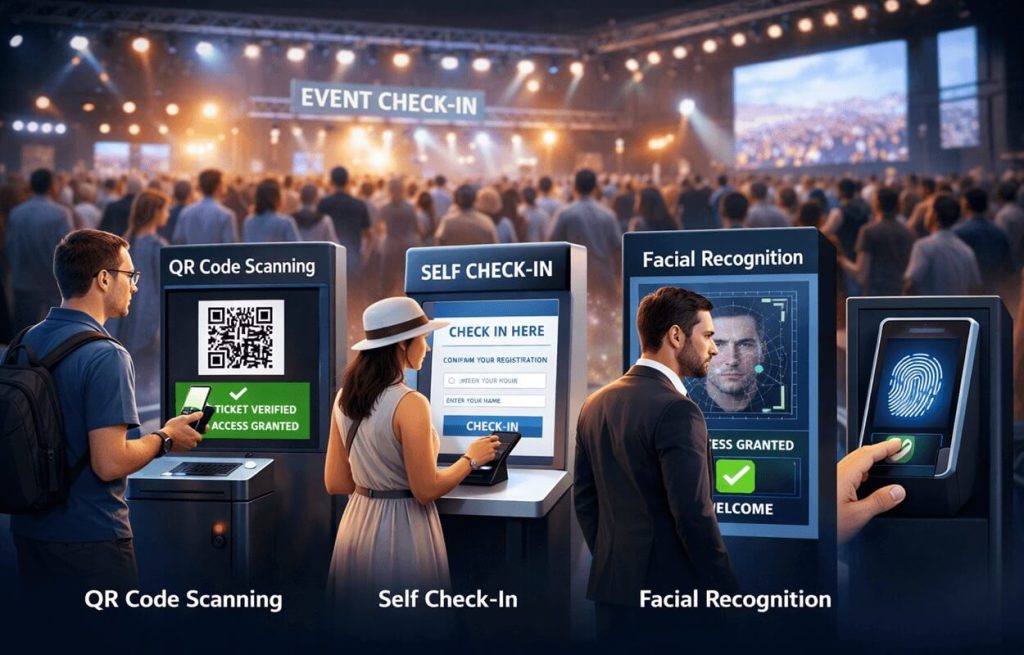
The tech you pick really matters in event data management and security. When you’re busy hunting for the best tech, don’t forget to ask the important security questions. Chat with your tech provider about their event data security features. Ask about their event tech tools and certifications. Good event tech providers like Dreamcast have already taken care of it. They’ve got encryption plus GDPR and ISO certifications already built in. Big or small, your attendee info is safe with them. When it comes to payments, just go with reliable systems such as Stripe or PayPal. They’ve got expert security teams and the systems to back it up. Handling payment data yourself is just asking for trouble.
Be Selective In Your Data Collection
This is a great place to start, and honestly, one of the most underrated aspects of event data management. Ask yourself: Do you actually need a registrant’s date of birth? Their home address? If the answer is no, don’t ask for it.
The more data you collect, the more you’re responsible for protecting. It’s that simple. This principle is called data minimization. For a virtual workshop, maybe all you need is a name and an email. For a paid in-person conference, you might need payment details. But anything beyond what’s genuinely necessary is extra risk with no real upside.
Less data also means a smaller headache if something goes wrong. Event data analytics get simpler. A breach is far less damaging when there’s less to expose. And from an attendee’s perspective, a short, focused registration form actually builds more trust than one that asks for everything under the sun. Customizable event registrations forms as provided by Dreamcast come in handy here.
Take Legal Compliance Seriously
Most event planners only think about legal compliance after something goes wrong. By then, it’s too late. Event data security is a legal obligation in many parts of the world, not just a good habit. The EU’s GDPR, for instance, can hit non-compliant organizations with fines of up to €20 million or 4% of global annual turnover. Whichever is higher. That’s not a slap on the wrist.
And it’s not just Europe. California, Australia, and Canada all have their own data privacy laws. If your attendees are coming from these regions, their regulations apply to you. Doesn’t matter where you’re based.The financial penalties are serious. But honestly, the reputational damage can hurt even more. Being known as the organizer who mishandled attendee data is not a label you want to carry into your next event.
So what’s the move? Bring in a data protection officer or a privacy lawyer. Have them go through your registration flow, your email campaigns, and your entire data trail. Yes, it costs something. But it costs a lot less than getting it wrong.
Ensure that Not Everyone Has Easy Access to the Event Attendee Data
You, as the event organizer, may have the best intentions of maintaining premium event data security. But an event team easily has about 20-30 people or more! Not each of them can be trusted with sensitive info. So, the best way out is to control access. It’s a key rule of proper event data management.
Not everyone on your team needs access to all attendee data. This seems obvious, but it’s surprisingly easy to overlook in the rush of event planning. A role-based access control system gives you the ability to define exactly who can see what. Your check-in volunteers don’t need to see payment information. Your marketing team doesn’t need home addresses. Limiting access isn’t about distrust. It’s about limiting exposure.
From an event data security standpoint, this is one of the most effective things you can do. The fewer people with access to sensitive data, the fewer potential points of failure.Train your team, too. Human error is one of the leading causes of data breaches.
Go Beyond Safe Data Use; Use it Smartly Too
Event data analytics is worth talking about here because it’s one of the real upsides of collecting this information responsibly. Good event data management means getting good, reliable data. This can really improve your future events. Think about who attends, which sessions are hits, and when people drop off during registration.
Say 60% of your registrants list sustainability as a professional interest. That’s a session topic right there. Or maybe your registration data shows a spike in sign-ups from a particular city. Could be worth hosting something closer to that audience next year. Dreamcast’s advanced analytics and reporting features are exactly what you need for this.
The point is that event data analytics is most powerful when your data practices are clean. Good event data management and meaningful insights go hand in hand.
Event Data Security After the Event Gets Over
The event’s done. The venue’s cleared out. But your job isn’t over yet, at least not when it comes to event data management. What happens to all that attendee data now? Most organizers hold onto it for reporting, marketing, and accounting. Fair enough. But the moment those purposes are served, that data needs to go. “I might need it someday” is not a good enough reason to keep it. That’s not event data security. That’s just hoarding sensitive information.
Your privacy policy should spell out exactly how long you’re holding onto data and why. Give attendees a way to request deletion if they want it. And when you do delete, do it properly. Not just from your main database. From your backups, your third-party tools, everywhere it lives.
Cleaning up after an event is part of running it well.
Have a Plan When Things Go Wrong
Nobody wants to deal with a data breach. But if it happens, how you respond will define you. Plan before you need to. A solid disaster recovery plan should answer these questions:
– How will you detect that a breach has occurred?
– Who on your team gets notified first, and in what order?
– How quickly will you reach out to affected attendees?
– What immediate steps will you take to contain the damage?
– Where is this plan documented, and does your whole team know it?
Write it down. Review it regularly. A plan that lives only in someone’s head isn’t a plan. And remember, attendees won’t just judge you for the breach. They’ll judge you for how you handled it. Transparency and speed matter. Own it, fix it, and communicate clearly. That’s what event data security looks like when things go wrong.
The Bottom Line
Good event data management isn’t complicated. It’s about collecting only what you need, protecting it properly, being honest about how you use it, and cleaning it up when you’re done. Do those things consistently, and you’re already ahead of most.
Your attendees are trusting you with their personal information. Event data security is how you show that trust was well placed. And in an industry built on experiences and relationships, that matters more than you might think.
Start with one area you know you could do better. Maybe it’s reviewing your privacy policy. Maybe it’s setting up two-factor authentication. Small steps, done consistently, add up to something solid.
FAQs
1. What is event data security?
Event data security is the process and tools used to keep attendee data secure from untoward breaches.
2. How to inform attendees why their data is being collected?
The easiest way is a well-crafted privacy policy document and a consent form.
3. What if an event requires extensive info to be collected?
Collecting extensive info is not a problem in itself if it’s serving a genuine purpose. However, that purpose should be clear, and in all circumstances, it should be protected.
4. What is GDPR?
GDPR is a European Union privacy law that governs how personal data is collected, stored, and used. It applies to any organization handling EU residents’ data, with fines reaching up to €20 million for non-compliance.